

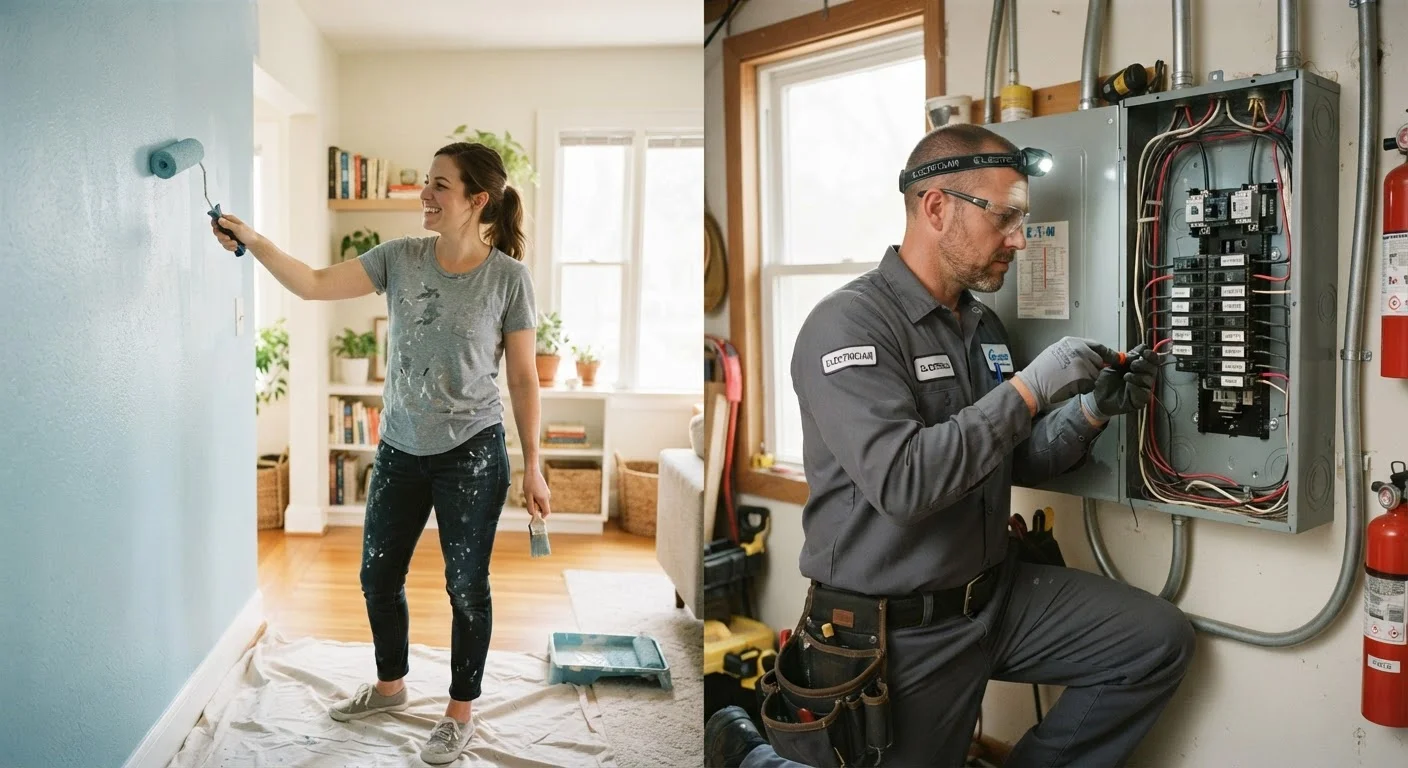
Option A
DIY Home Repairs
The hands-on, cost-conscious approach for capable homeowners.
Best for: Routine maintenance, cosmetic updates, and low-risk repairs where mistakes are easily corrected and safety hazards are minimal.
Option B
Hiring a Licensed Professional
The expert-backed choice when safety, code compliance, or complexity is involved.
Best for: Electrical, structural, plumbing-into-mains, gas, and roofing work where errors can cause injury, code violations, or costly damage.
The Real Question Behind Every Repair Decision
Every homeowner eventually faces a moment of hesitation standing in front of a leaking pipe, a flickering light switch, or a sagging gutter: Can I handle this, or do I need to call someone? The answer isn't always obvious, and the stakes vary enormously depending on the task.
The DIY vs. professional decision is less about confidence and more about an honest assessment of three things: safety risk, code requirements, and reversibility. A paint color you dislike can be repainted. A gas line incorrectly connected cannot be undone without serious consequences.
Understanding where that line sits - and why it exists - helps you protect your home, your household, and your wallet. It also makes you a more informed client when you do hire out work, allowing you to ask better questions and read estimates with more confidence.
| Criterion | DIY Home Repairs | Hiring a Licensed Pro |
|---|---|---|
| Upfront Cost | Lower - labor is your own time | Higher - includes labor and overhead |
| Safety Risk | Low for cosmetic/maintenance tasks | Managed by trained, insured professional |
| Code Compliance | Homeowner responsible; easy to miss | Licensed pros work to code; permits handled |
| Quality Guarantee | Depends on skill and preparation | Typically backed by warranty or liability |
| Suitable Task Types | Painting, caulking, minor fixtures, landscaping | Electrical, gas, structural, roofing, plumbing |
| Permit Handling | Homeowner must research and apply | Contractor typically manages permits |
| Insurance Implications | Unpermitted work may void coverage | Licensed work generally supports claims |
Tasks That Are Genuinely DIY-Friendly
A wide range of home maintenance tasks fall comfortably within the reach of an attentive homeowner who takes time to prepare. These generally share a few traits: they don't involve hazardous systems, permits aren't typically required, and a mistake - while inconvenient - won't endanger anyone or cause structural damage.
- Painting and caulking - interior walls, trim, and exterior siding touch-ups
- Minor drywall patching - small holes and surface cracks
- Fixture swaps - replacing faucets, showerheads, light fixtures (on existing circuits, with power off)
- Weatherstripping and door hardware - improves energy efficiency with minimal risk
- Gutter cleaning and downspout flushing
- Deck cleaning and staining
- Basic landscaping and garden maintenance
Keeping a log of completed work - dates, materials used, and any warranty information - pays dividends later. Our guide to home repair recordkeeping explains exactly how to build that habit.
A Note on 'Fixing' Fixture Wiring
Swapping a light fixture is often cited as a safe DIY task - and it can be, provided the circuit is correctly wired to begin with and you confirm the power is fully off at the breaker. However, if you open a junction box and find wiring that looks unusual, damaged, or non-standard, stop and call a licensed electrician. What looks like a simple swap can reveal a deeper problem.
When a Professional Isn't Optional
Certain categories of home repair are regulated for good reason. The risk of injury, fire, structural failure, or code violation is high enough that most jurisdictions require licensed tradespeople - and permits - for these types of work.
Electrical Work
Beyond swapping a light fixture on an existing, correctly wired circuit, electrical work carries serious hazard. Panel upgrades, new circuit runs, and outlet additions in kitchens or bathrooms typically require a licensed electrician and an inspection. Our article on DIY electrical mistakes covers the specific errors homeowners most commonly make.
Gas Lines and Appliances
Gas work is not a DIY task in most jurisdictions. Even minor connections can create leak conditions that are both invisible and extremely dangerous. Always hire a licensed plumber or gas technician.
Structural and Load-Bearing Work
Removing or modifying walls - particularly load-bearing ones - without engineering review risks collapse. This category includes foundation repairs and any work that affects the structural integrity of the home.
Roofing
Beyond basic minor patching, roofing involves both fall hazard and the risk of water intrusion if done incorrectly. Licensed roofers carry liability insurance that protects you if something goes wrong.
If a larger renovation is on the horizon, it's worth reading our comparison of hiring a general contractor vs. managing subcontractors yourself to understand how professional oversight is structured.
~33%
Home fires attributed to electrical failure
The U.S. Fire Administration has consistently found electrical failures or malfunctions among the leading causes of home structure fires in the United States.
$4,000+
Median cost to correct unpermitted work
Home inspection and real estate industry data suggest bring-up-to-code costs for unpermitted additions or electrical work frequently run into thousands of dollars when discovered during a sale.
How Unpermitted Work Can Hurt You Later
It can be tempting to skip the permit process - permits take time, cost money, and invite inspection. But unpermitted work that should have been permitted creates compounding problems:
- Insurance complications: If damage occurs in an area where unpermitted work was done, your insurer may dispute or deny the claim.
- Sale obstacles: Buyers' home inspectors and attorneys flag unpermitted work. It can delay or derail a sale, or require you to bring the work up to code at your expense before closing.
- Safety liability: If a fire or injury is traced to unpermitted electrical or structural work, legal exposure can follow.
The guide to renovation permits outlines which projects typically require official approval in residential settings. When in doubt, a quick call to your local building department is free and clarifying.
The content on this site is for informational purposes only and is not a substitute for professional advice. Always consult a qualified professional for guidance specific to your situation.