

Why Fall Prep Pays for Itself
Winter weather stresses nearly every system in your home simultaneously - the heating equipment runs continuously, water pipes face freezing temperatures, and the building envelope (walls, roof, windows, and foundation) is tested by wind, ice, and moisture. A few hours of focused preparation in the fall can prevent the kind of damage - burst pipes, ice dams, failed furnaces - that routinely costs homeowners thousands of dollars.
This checklist covers the five most consequential areas: insulation and air sealing, outdoor plumbing, heating systems, gutters and roofing, and exterior prep. It pairs well with a year-round approach; see your full annual maintenance calendar for tasks that fall outside the winter prep window.
What you will need
What You'll Need
Most winterization tasks require only basic tools and materials available at any hardware store. Gather the following before you begin so you can work through each step without interruption.
Caulk gun and weatherstripping
Seals gaps around windows, doors, and pipe penetrations to block cold air infiltration.
Pipe insulation foam sleeves
Wraps exposed water pipes in unheated spaces to help prevent freezing.
Gutter scoop and garden hose
Removes leaf debris from gutters and flushes downspouts to ensure proper drainage.
HVAC filter (correct size for your system)
Replaces the dirty furnace filter so your heating system runs efficiently all winter.
Programmable or smart thermostat
Lets you set temperature schedules that reduce energy use overnight without risking pipe freeze.
Carbon monoxide detector
Detects CO leaks from heating equipment - required by code in most U.S. states.
Step-by-Step Winterization
Work through the steps below in order - insulation and air sealing first, exterior work last. That sequence lets you address heat retention before turning your attention to structural and drainage issues.
Audit insulation and seal air leaks
Start in the attic, where heat loss is typically greatest. Insulation should completely cover the attic floor joists without gaps. In most U.S. climate zones, the U.S. Department of Energy recommends R-38 to R-60 for attic insulation - check your local building department for the figure that applies to your area.
Next, walk through the house with a lit incense stick or a smoke pen near window frames, door thresholds, electrical outlets on exterior walls, and where pipes or wires enter from outside. Drifting smoke reveals drafts. Seal gaps with caulk for stationary joints and weatherstripping for moving parts like door sweeps.
Winterize outdoor plumbing
Frozen pipes can burst and cause serious water damage. Disconnect and drain all garden hoses before the first freeze. Locate the indoor shut-off valve for each outdoor hose bib (spigot), close it, then open the outdoor faucet to drain the remaining water from the line.
If your home has an irrigation or sprinkler system, arrange for a licensed irrigation professional to blow out the lines with compressed air - improper technique can damage backflow preventers or underground pipes. Any pipes running through unheated spaces like a garage, crawl space, or against an exterior wall should be wrapped with foam pipe insulation sleeves.
Service your heating system
Replace the furnace or heat pump filter - a clogged filter forces the system to work harder, raises energy costs, and can cause overheating. Check the filter monthly during heavy-use periods and replace it when it looks gray and dense.
Schedule a professional HVAC tune-up before the heating season peaks. A licensed technician will inspect the heat exchanger for cracks (a safety concern with gas furnaces), check refrigerant levels for heat pumps, clean burners, and test safety controls. This is not a DIY task - gas and electrical components require a licensed professional.
Test your carbon monoxide detector and replace its battery. If the unit is more than seven years old, replace the detector entirely.
Clear gutters and inspect the roof
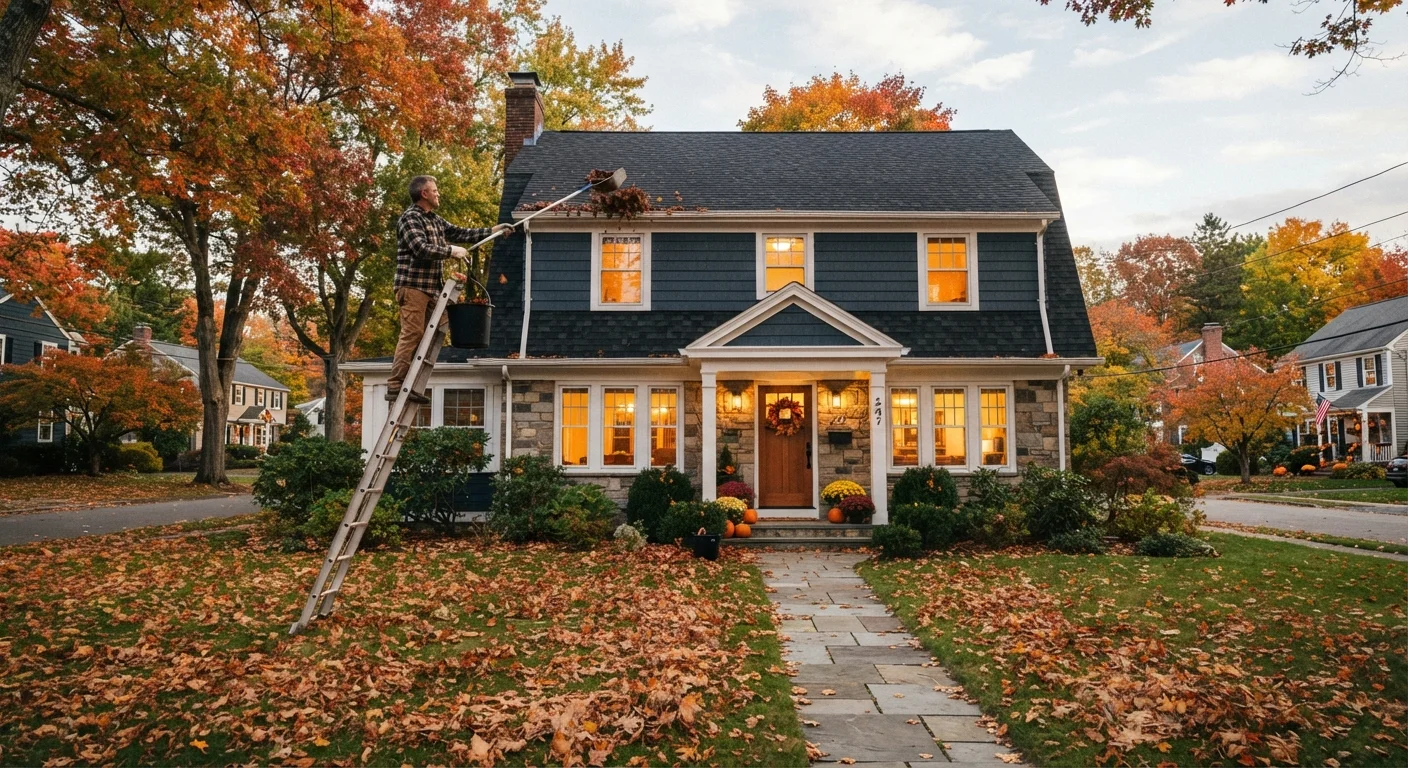
Clogged gutters cause water to back up under shingles and, in freezing conditions, form ice dams - ridges of ice that can force water into your home's interior. Clear gutters of all leaves and debris after most trees in your area have shed for the season.
Flush downspouts with a garden hose to confirm they drain freely. Downspout extensions should direct water at least 6 feet from the foundation.
From the ground or a safely positioned ladder, scan the roof for missing, curled, or cracked shingles and look for gaps in flashing around chimneys, skylights, and vent pipes. If you spot damage, contact a licensed roofing contractor - walking on a roof without training and proper safety equipment carries serious fall risk.
Prepare the exterior and landscaping
Trim tree branches that overhang the roof or are within striking distance of power lines. Ice and heavy snow can bring down weakened limbs. For large branches or those near utility lines, hire a certified arborist.
Store or cover outdoor furniture, grills, and garden equipment. Drain gas-powered tools such as lawn mowers per the manufacturer's guidelines to prevent fuel degradation over winter storage.
Apply a fresh bead of exterior caulk around foundation vents, window wells, and where siding meets trim if the existing caulk is cracked or pulling away. This prevents both moisture intrusion and pest entry during the colder months.
Set a Minimum Indoor Temperature
Even when your home is unoccupied, keep the thermostat set no lower than 55°F (13°C). This simple measure keeps pipes from freezing during cold snaps without wasting significant energy. If you plan to be away for an extended period, ask a neighbor or property manager to check on the house periodically.
Electrical and Gas Work Requires a Licensed Pro
This guide covers homeowner-accessible maintenance tasks. Any work involving your home's electrical panel, gas lines, or venting systems must be performed by a licensed electrician or HVAC technician. Attempting these repairs without proper training and permits creates serious safety and liability risks.
After You've Finished: Ongoing Winter Monitoring
Winterization is a one-time seasonal effort, but a few quick checks throughout the winter keep small problems from becoming large ones.
- Monitor for ice dams after heavy snowfall - a ridge of ice at the roof edge, combined with icicles and water stains on interior ceilings, signals a problem. Do not attempt to remove ice dams yourself with sharp tools; contact a professional.
- Check pipes during cold snaps. If the forecast drops well below freezing and you have pipes on exterior walls, open cabinet doors beneath kitchen and bathroom sinks to allow warmer air to circulate around them.
- Replace furnace filters every 1-3 months depending on your system and household dust levels.
Know Your Main Water Shut-Off Location
Before winter arrives, every adult in your household should know exactly where the main water shut-off valve is and how to close it quickly. If a pipe bursts, getting to that valve in the first few minutes can prevent tens of thousands of dollars in water damage. Test the valve now to confirm it turns and closes fully - if it's stuck or corroded, have a licensed plumber service it.
If your home has a basement you're considering improving or finishing, note that proper winterization - especially moisture control in crawl spaces - is a prerequisite for that kind of project. Learn what finishing a basement actually involves before committing to that investment.
This article is for general informational purposes only and does not constitute professional engineering, contracting, or safety advice. Local building codes and conditions vary; always verify requirements with your local authority and consult licensed professionals for hazardous or regulated work.
The content on this site is for informational purposes only and is not a substitute for professional advice. Always consult a qualified professional for guidance specific to your situation.