

Start here
How Your Home's Plumbing System Works
Next
Key Components Every Homeowner Should Know
Then
Warning Signs You Shouldn't Ignore
Build habits
Simple Upkeep Habits That Prevent Costly Repairs
Know your limits
When to Call a Licensed Plumber
How Your Home's Plumbing System Works
Your home's plumbing is made up of two distinct systems working in opposite directions. The supply system delivers pressurized fresh water from the municipal main (or a private well) to every faucet, fixture, and appliance that needs it. The drain-waste-vent (DWV) system removes used water and waste by gravity, channeling everything toward the sewer line or septic tank.
These two systems never mix. Supply lines are always under pressure; drain lines rely on gravity and proper venting. Vent pipes - those pipes you see poking through the roof - allow air into the drain system so water flows freely and sewer gases escape safely to the outside.
Understanding this two-system model helps you trace problems logically. Low water pressure points to the supply side. Slow drains or gurgling sounds point to the DWV side. That distinction alone makes troubleshooting far less mysterious. For a broader view of home systems, see the complete homeowner's maintenance overview.
Supply system
The network of pressurized pipes that delivers fresh, clean water from the municipal main or private well to every faucet and fixture in your home.
Drain-waste-vent (DWV) system
The set of pipes that carries used water and waste away from fixtures by gravity, venting gases safely through pipes that exit through the roof.
P-trap
A curved pipe section beneath every drain that holds a small amount of water, forming a seal that prevents sewer gases from entering your home.
Shutoff valve
A valve that stops water flow - either to the entire house (main shutoff) or to a single fixture - allowing repairs without affecting the rest of the system.
TPR valve
A temperature and pressure relief valve on a water heater that automatically releases pressure if it exceeds safe levels, acting as a critical safety device.
Aerator
A small mesh screen attached to a faucet spout that mixes air into the water stream; it can collect mineral deposits and be cleaned or replaced easily.
Key Components Every Homeowner Should Know
You don't need to memorize every fitting and pipe diameter, but familiarity with a handful of components pays dividends when something goes wrong.
- Main shutoff valve: This single valve stops all water flow to the house. Find it now - before a burst pipe or overflowing fixture forces a frantic search. It's typically located where the supply line enters the foundation.
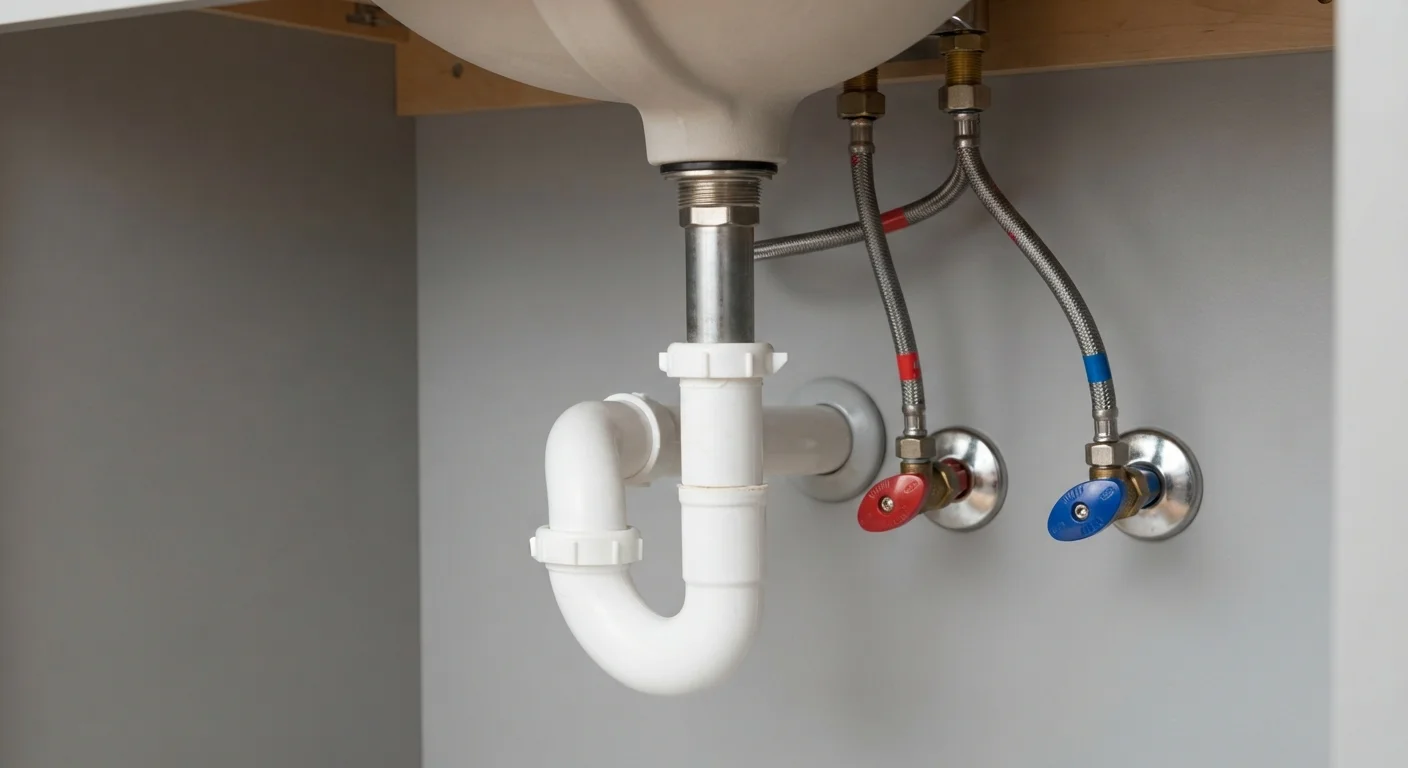
- Fixture shutoff valves: Small oval- or lever-shaped valves located beneath sinks and behind toilets. These let you isolate one fixture without cutting water to the whole house.
- P-trap: The curved section of pipe under every sink and tub drain. It holds water to block sewer gases. If you smell something unpleasant near a drain, a dry P-trap is a common culprit.
- Supply lines: The flexible braided or rigid tubes connecting the shutoff valve to the faucet or toilet tank. Inspect these periodically - a bulging or corroded supply line is a warning sign worth acting on.
- Water heater: Your water heater has its own cold-water inlet and hot-water outlet, plus a temperature and pressure relief (TPR) valve - a critical safety device. The TPR valve should be tested periodically according to the manufacturer's guidance.
Staying familiar with these parts is also one of the home maintenance tasks often left off the list that quietly protect your home over time.
Warning Signs You Shouldn't Ignore
Plumbing problems rarely appear without warning. Learning to recognize early signals can mean the difference between a minor fix and a major repair.
Never Ignore Multiple Slow Drains
A single slow drain is usually a local clog you can address yourself. But if two or more drains in different parts of the house are backing up simultaneously, this often signals a blockage or problem in the main drain line - a situation that calls for a licensed plumber rather than a bottle of drain cleaner. Using harsh chemical drain cleaners repeatedly can damage older pipes and should be a last resort.
- Slow or gurgling drains: A single slow drain usually indicates a local clog. Multiple slow drains or gurgling sounds throughout the house can signal a problem with the main drain line or venting.
- Low water pressure: Sudden pressure loss at one fixture often means a partially closed valve or a clogged aerator (the small screen at the faucet tip). House-wide pressure loss warrants a call to your water utility or a plumber.
- Water stains on ceilings or walls: Brown or yellow staining indicates moisture behind the surface. This is rarely a cosmetic issue alone - it points to an active or past leak that needs investigation.
- Unusually high water bills: An unexplained spike in water use often signals a running toilet or hidden leak. A continuously running toilet can waste a significant amount of water daily without making much noise.
- Discolored water: Rusty or brownish water can indicate corrosion inside aging pipes or a water heater nearing the end of its lifespan.
Simple Upkeep Habits That Prevent Costly Repairs
Most plumbing emergencies are preventable. A small investment of attention on a regular schedule keeps the system running reliably.
Take a 10-Minute Plumbing Walk-Through
Once a season, spend ten minutes opening cabinet doors under every sink, checking supply lines for moisture or bulging, and listening for any running sounds from toilets. This brief habit catches the majority of slow leaks before they become expensive water damage. Keep a small flashlight in a kitchen drawer so the check takes no effort to start.
- Check under sinks monthly. Look for moisture, soft cabinet floors, or corrosion on supply lines and drain connections. Catching a slow drip early is far simpler than repairing water-damaged cabinetry.
- Test shutoff valves annually. Valves that sit unused for years can seize. Turn each fixture shutoff valve off and back on once a year to keep them operable.
- Use drain strainers. Inexpensive strainers in tub, shower, and kitchen drains catch hair, food, and debris before they build up into stubborn clogs.
- Flush rarely used drains. Guest bathrooms or utility sinks used infrequently can lose the water seal in their P-traps. Run the water for a minute every few weeks.
- Know your water heater's age. Most tank-style water heaters have a lifespan of roughly 8-12 years. Check the manufacturing date on the label and plan ahead - a failing water heater rarely fails at a convenient moment.
If you're planning to expand your home's footprint, plumbing is one of the major considerations covered in our guide to finishing a basement.
When to Call a Licensed Plumber
Knowing your limits is as important as knowing the basics. Some tasks are genuinely DIY-friendly; others carry risks that make professional help the right call.
Handle with confidence: Replacing a faucet aerator, unclogging a single drain with a hand snake or plunger, replacing a toilet flapper, or tightening a leaking supply line connection (after shutting off the valve) are all reasonable tasks for a prepared homeowner.
Call a licensed plumber for:
- Any work on the main water supply or main sewer line
- Installing or moving pipes inside walls or floors
- Persistent low pressure or leaks that can't be traced to a single fixture
- Water heater installation or gas line connections
- Any project that requires a permit - which, depending on your municipality, may include adding new fixtures or rerouting supply lines
Plumbing work that involves structural elements or new pipe runs often requires permits and inspections. Always verify local requirements with your municipal building department before starting any project beyond routine maintenance. For general guidance on property ownership responsibilities, understanding when professional trades are needed is an important part of being a prepared homeowner.
This article is for general informational and educational purposes only. It does not constitute professional plumbing, construction, or legal advice. Always consult a licensed plumber or your local building authority for guidance specific to your home and jurisdiction.
Frequently Asked Questions
In most homes, the main shutoff valve is located where the water supply line enters the house - often near the water meter, in a utility room, crawl space, or basement. Some homes have it in a buried curb box near the street. Locate and test it before you ever need it in an emergency.
A P-trap is the curved pipe section beneath every drain. It holds a small amount of water that acts as a seal, blocking sewer gases from entering your home through the drain opening. If a drain goes unused for weeks, that water can evaporate - running it briefly restores the seal.
Check your water meter, then avoid using any water for two hours. If the meter reading changes, there's likely a hidden leak somewhere in the system. Also look for unexplained spikes in your water bill, soft spots in flooring near plumbing, or musty odors under sinks.
Many dripping faucets are caused by a worn washer or cartridge - a repair within reach of most homeowners with basic tools. Turn off the supply valve under the sink first, then follow instructions specific to your faucet type. When in doubt, a plumber can complete the repair quickly.
Avoid flushing grease, cooking oils, coffee grounds, wipes (even those labeled 'flushable'), and excessive food scraps. These are among the most common causes of stubborn clogs and can damage pipes over time. A strainer in sink and tub drains catches debris before it enters the pipe.
Minor repairs like replacing a faucet or fixing a running toilet generally don't require permits. However, work that involves moving or adding pipes, connecting to the main supply or sewer line, or touching gas lines typically does require a permit and licensed contractor. Requirements vary by municipality, so check with your local building department.
The content on this site is for informational purposes only and is not a substitute for professional advice. Always consult a qualified professional for guidance specific to your situation.