

Start here
What Are Property Lines and Why They Matter
Next
Understanding Easements: Types and Practical Effects
Then
Encroachments: When Structures Cross the Line
When you're ready
How to Discover Easements and Encroachments on Your Property
Apply it
Resolving Disputes and Protecting Your Rights
What Are Property Lines and Why They Matter
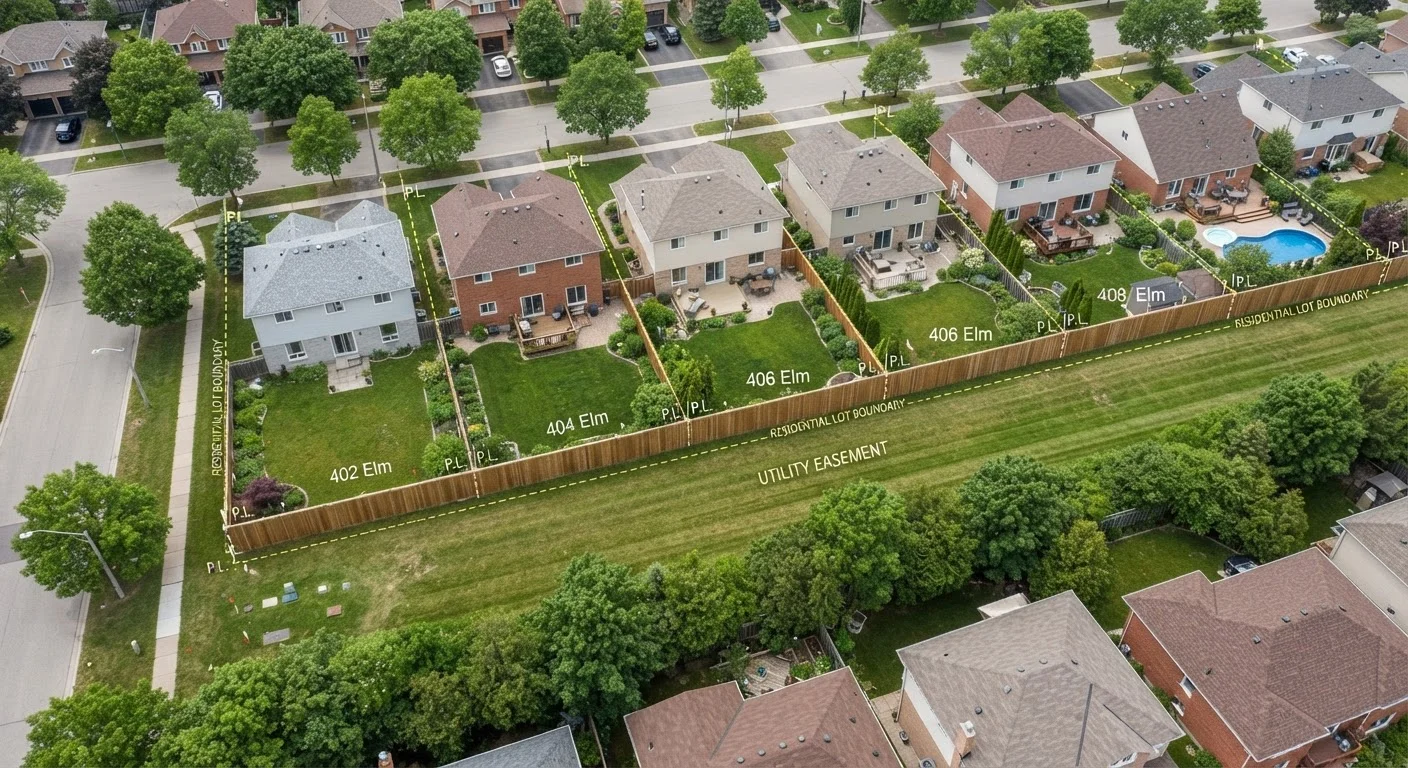
When you own a home, you own a defined parcel of land - not just the structure sitting on it. Property lines establish the legal boundaries of that parcel, separating what is yours from what belongs to your neighbors, the municipality, or the public. These boundaries are not always intuitive from the street view; they often don't align with fences, landscaping, or driveways.
Property boundaries are established through official surveys and recorded in your local land records. Your deed will typically include a legal description of the parcel, but it may not be detailed enough to resolve a dispute on its own. A boundary that is misunderstood - or that has never been formally confirmed - can create complications when you sell, refinance, build, or come into conflict with a neighbor.
As the common misconceptions about property rights article notes, many homeowners assume that what they see on the ground reflects their legal boundary. That assumption can be costly.
Property line
The legally established boundary that separates one owner's parcel of land from another's, as determined by a survey and recorded in public land records.
Easement
A legal right that allows a specific person, company, or the public to use a portion of another person's property for a defined purpose, such as accessing utilities or crossing the land.
Encroachment
A situation where a structure or improvement built by one property owner extends physically onto land that belongs to a neighboring owner.
Prescriptive easement
An easement that arises through long-term, open, and continuous use of someone else's land without permission, which courts may recognize as a legal right after a state-defined period.
Adverse possession
A legal doctrine that can allow a person to claim ownership of land they have occupied openly and continuously for a period set by state law, under specific legal conditions.
Land survey
A professional measurement and mapping of a property's boundaries, conducted by a licensed land surveyor, that identifies exactly where a parcel begins and ends.
Understanding Easements: Types and Practical Effects
An easement is a legal right that allows someone other than the property owner to use a portion of land for a specific purpose. Easements are extremely common - in many neighborhoods, the majority of lots carry at least one. The key characteristic that surprises most homeowners: easements typically run with the land, meaning they transfer automatically when the property is sold.
Common Types of Easements
- Utility easements allow power, gas, water, or telecommunications companies to access underground or overhead infrastructure crossing your property. These are among the most common and are usually not negotiable.
- Access or ingress/egress easements grant a neighboring property owner the right to cross your land - often because their parcel would otherwise be landlocked.
- Drainage easements preserve the flow of water across parcels and often restrict what you can build in those areas.
- Prescriptive easements arise when someone has openly and continuously used part of your land for a period defined by state law, without your permission. Courts can formalize these even without a written agreement.
Review Easements Before You Build Anything
Always check for recorded easements before installing a fence, shed, deck, or landscaping feature. Your local municipality and utility companies may require access to easement areas at any time. Structures built inside an easement zone can be ordered removed - often at your own cost.
Understanding what easements are attached to a property is essential before you build a shed, plant a permanent garden, or install a fence. Structures placed inside an easement area may need to be removed at your expense.
For context on a related form of property restriction, see when HOAs have authority over your property.
Encroachments: When Structures Cross the Line
An encroachment occurs when a structure - a fence, retaining wall, deck, driveway, or even a building - extends beyond the owner's property line onto an adjacent parcel. Encroachments can be intentional or completely accidental, and they are more common than most homeowners expect.
The practical problems they create include:
- Sale or refinancing complications. Lenders and title companies often require a survey and may flag an encroachment as a condition that must be resolved before closing.
- Neighbor disputes. A new neighbor who commissions a survey may discover an encroachment that was ignored for years - and may have grounds to demand its removal.
- Adverse possession risk. In some states, if an encroachment goes unchallenged for long enough under the right conditions, the encroaching party may acquire a legal claim to that strip of land. The rules for this vary significantly by state.
Don't Assume a Fence Marks the True Boundary
Fences are frequently installed without a professional survey, and they can be off by several feet in either direction. Relying on an existing fence to determine where your property ends is a common and potentially expensive mistake. If a boundary question arises, commission a licensed survey before taking any action.
If you suspect an encroachment - either by you onto a neighbor's land or by a neighbor onto yours - the first step is to get the facts. Accusations made without a confirmed survey can damage neighbor relationships unnecessarily.
How to Discover Easements and Encroachments on Your Property
The most reliable way to understand your property's boundaries and any claims attached to them is through a combination of document review and professional measurement.
Start with Public Records
Your local county recorder's or assessor's office holds recorded deeds, plat maps, and easement documents. These are often searchable online. A title search - typically done during a home purchase - will surface most recorded easements. Reviewing your title insurance policy can also reveal what was found and what exceptions apply.
Commission a Land Survey
A licensed land surveyor physically measures your parcel and marks the boundary lines. This is the only method that gives you a legally defensible answer to where your property ends. Surveys can reveal encroachments invisible from casual observation - such as a neighbor's fence set six inches inside your line.
Review Your Title Insurance Policy
If you purchased an owner's title insurance policy when you bought your home, review it to understand what easements were disclosed and what protections you have. Note that title insurance covers prior recorded issues; it does not protect against encroachments that could have been found with a survey if you declined one at closing.
For related issues that affect property titles, see liens on your home.
Resolving Disputes and Protecting Your Rights
When a boundary issue surfaces, the approach you take matters. Escalating prematurely can make a resolvable problem much harder to fix.
Start with Direct Communication
If you and a neighbor share a boundary concern, a calm, fact-based conversation - backed by survey data - is often the fastest path to resolution. Many encroachments happened before either current owner was involved, and neighbors are frequently willing to negotiate once the facts are clear.
Consider a Written Agreement
If both parties agree on how to handle an encroachment or easement issue, formalize it in a written, recorded document. This protects both sides and ensures the resolution is binding on future owners. Common options include a license agreement (revocable permission to use the land), a boundary line agreement, or an easement by agreement.
Consult a Real Estate Attorney
Easement and encroachment law varies meaningfully by state. An attorney can evaluate your specific situation, review your deed and survey, and advise on your legal options - including litigation if necessary. Attempting to resolve a significant boundary dispute without professional legal guidance carries real risk.
Being proactive about your property's boundaries is part of responsible ownership. As outlined in neglected homeowner duties that create bigger problems later, deferring action on known issues tends to compound them over time.
This article is for general informational purposes only and does not constitute legal advice. Property and boundary law varies by state and locality. Consult a licensed real estate attorney for guidance specific to your situation.
Frequently Asked Questions
Easements can be terminated in several ways: by written agreement between the parties, by abandonment (in some states), or when the purpose of the easement no longer exists. However, removing a recorded easement typically requires legal action or a formal release signed by the party holding the easement right. Consult a real estate attorney for guidance specific to your situation.
It depends on the type and location. A utility easement buried underground may have little practical effect, while an easement granting public access across your front yard could significantly affect value and privacy. A licensed appraiser can help you assess the impact on your specific property.
Liability questions involving easements are complex and vary by state. Generally, the property owner may still hold some duty of care even for easement areas, but the easement holder's responsibilities can also come into play. An attorney familiar with your state's premises liability laws can provide accurate guidance.
In most jurisdictions you can, but you must first verify the exact location of the line with a licensed surveyor. Local zoning codes, HOA rules, and any recorded easements can also limit or regulate fencing. Check with your local planning office before breaking ground.
A pre-existing encroachment can still create legal and financial complications for you as the new owner. If it was not disclosed or detected before closing, you may have recourse against the seller depending on your state's disclosure laws. A real estate attorney can assess your options.
Most easements created through formal agreements must be in writing and recorded in the public land records to be fully enforceable against future owners. However, some easements - such as easements by implication or prescription - can arise through long-term use or necessity without a written document. State law governs the specifics.
The content on this site is for informational purposes only and is not a substitute for professional advice. Always consult a qualified professional for guidance specific to your situation.