

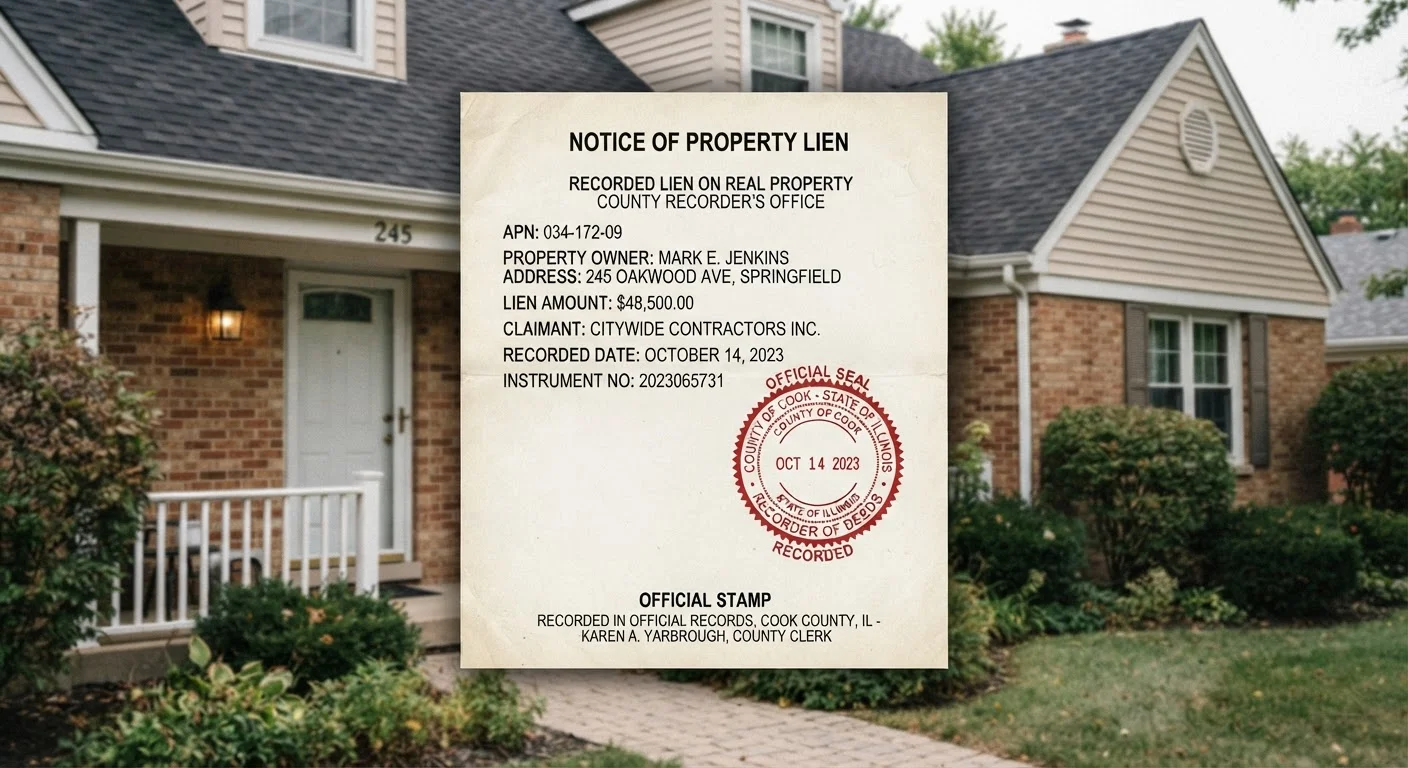
How Liens Are Created
Liens fall into two broad categories: voluntary and involuntary.
Voluntary liens arise when you agree to use your property as collateral. The most common example is a mortgage - when you borrow money to purchase a home, you grant the lender a lien as security. Home equity loans and lines of credit work the same way. You consented to the lien as a condition of the loan.
Involuntary liens are imposed without your consent. These include:
- Tax liens: Filed by federal, state, or local governments for unpaid income taxes or property taxes.
- Mechanics liens (also called construction liens): Recorded by contractors, subcontractors, or suppliers who weren't paid for work or materials on your property.
- Judgment liens: Arise when a court rules against you in a lawsuit and the creditor records that judgment against your real estate.
- HOA liens: Placed by a homeowners association for unpaid assessments or fines.
Understanding the full scope of your property rights from the start helps. What owning a home actually means legally and financially lays out those obligations in broader context.
Liens Are Attached to the Property, Not Just the Owner
A lien recorded against a property remains with it even when ownership changes hands. If you purchase a home without discovering an existing lien, you may inherit the obligation to resolve it. This is one of the primary reasons lenders and buyers require a title search and title insurance before any transaction closes.
How Lien Priority Works
When multiple liens exist on one property, priority determines the order in which creditors are paid - most critically in a foreclosure or forced sale. The general rule is first in time, first in right: the lien recorded earliest in the public record holds the highest priority.
There are important exceptions:
- Property tax liens typically hold super-priority status under state law, meaning they are paid before any other lien regardless of when they were recorded.
- Purchase-money mortgages - the loans used to buy a property - often receive priority over other liens that were technically recorded first.
- Mechanics liens may relate back to when work began, not when the lien was filed, which can affect priority disputes.
Priority matters most when a home sells for less than the total debt secured against it. Lienholders in junior (lower-priority) positions may receive partial payment or nothing at all.
36 states
States granting HOAs foreclosure authority for unpaid liens
According to research from the Community Associations Institute, the majority of U.S. states allow HOAs to foreclose on properties for unpaid assessments under certain conditions.
~90 days
Typical mechanics lien filing deadline after project completion
While filing windows vary by state, most jurisdictions require contractors and suppliers to file a mechanics lien within 60-120 days of completing work or delivering materials.
How Liens Are Removed
Clearing a lien is generally necessary before you can sell or refinance with a clean title. Several paths exist:
- Pay the debt in full. The lienholder then issues a release of lien (sometimes called a satisfaction of lien or discharge), which is recorded in public records to show the claim is extinguished.
- Negotiate a settlement. In some cases - particularly with judgment liens - a creditor may accept less than the full amount owed in exchange for releasing the lien. Get any agreement in writing before paying.
- Dispute an invalid lien. If a lien was filed in error, by a contractor who didn't follow proper legal procedures, or after the statute of limitations expired, you may be able to challenge it. This typically requires legal assistance.
- Wait for expiration. Some liens, particularly mechanics liens, expire if the lienholder doesn't take further legal action within a defined period. However, relying on expiration without legal guidance is risky.
Title insurance can sometimes help cover the cost of defending against certain title defects, including liens that weren't discovered before closing. Title insurance: what it covers and why it exists explains how those protections work.
Request a Release of Lien in Writing - and Record It
Once a lien is paid or settled, don't assume it disappears automatically. Request a formal written release or satisfaction document from the lienholder and make sure it is recorded in your county's public land records. An unrecorded release may not appear in future title searches, creating complications when you eventually sell or refinance.
What Homeowners Should Watch For
Liens can attach to your property even when you believe all your bills are paid. Contractors who hire subcontractors can create mechanics lien exposure - you may owe the general contractor, but a subcontractor who wasn't paid by that contractor can still lien your home in many states. This is a common and often surprising discovery during a title search.
Similarly, boundary and access rights aren't the only encumbrances that can complicate your title. Liens are another layer of complexity that every homeowner benefits from understanding before problems arise.
How title is held also intersects with lien exposure. A judgment against one co-owner may or may not attach to jointly held property depending on the form of ownership. How you hold title has real legal consequences beyond inheritance planning.
If you discover an unexpected lien, consult a licensed real estate attorney in your state. Lien law varies significantly by jurisdiction, and the right approach depends on the lien type, its age, and the lienholder's current status.
This article is for general informational and educational purposes only. It is not legal or financial advice. Consult a licensed attorney or financial professional for guidance specific to your situation.
Frequently Asked Questions
Yes. Most liens must be resolved before a title company will issue title insurance, which is required in nearly all real estate transactions. You can sometimes pay off a lien at closing from the sale proceeds, but unresolved disputes can delay or block a sale entirely.
Liens are recorded in public land records at your county recorder's or clerk's office. A title search - typically performed during a refinance or sale - will surface any recorded liens. You can also request a property report or check some county websites directly.
Tax liens no longer appear on consumer credit reports following changes by the major credit bureaus in 2017. However, the underlying debt - such as a judgment or unpaid contractor bill - may still affect your credit through other reporting channels.
When you refinance, the new lender typically requires that their mortgage hold first-lien position. This may require subordinating or paying off other liens. The process, called lien subordination, involves formal agreements between the new lender and existing lienholders.
Yes. Homeowners associations can place liens on properties for unpaid dues, fines, or special assessments. These liens can sometimes lead to foreclosure depending on state law and HOA governing documents. See our guide on <a href="/real-estate/property-ownership/when-homeowners-associations-have-authority-over-your-property">HOA authority over your property</a> for more detail.
It depends on the type and state law. Judgment liens typically have a validity period of five to ten years but can often be renewed. Tax liens may remain indefinitely until resolved. Mechanics liens generally have shorter windows - often 90 days to a year - before they must be enforced or they expire.
The content on this site is for informational purposes only and is not a substitute for professional advice. Always consult a qualified professional for guidance specific to your situation.