

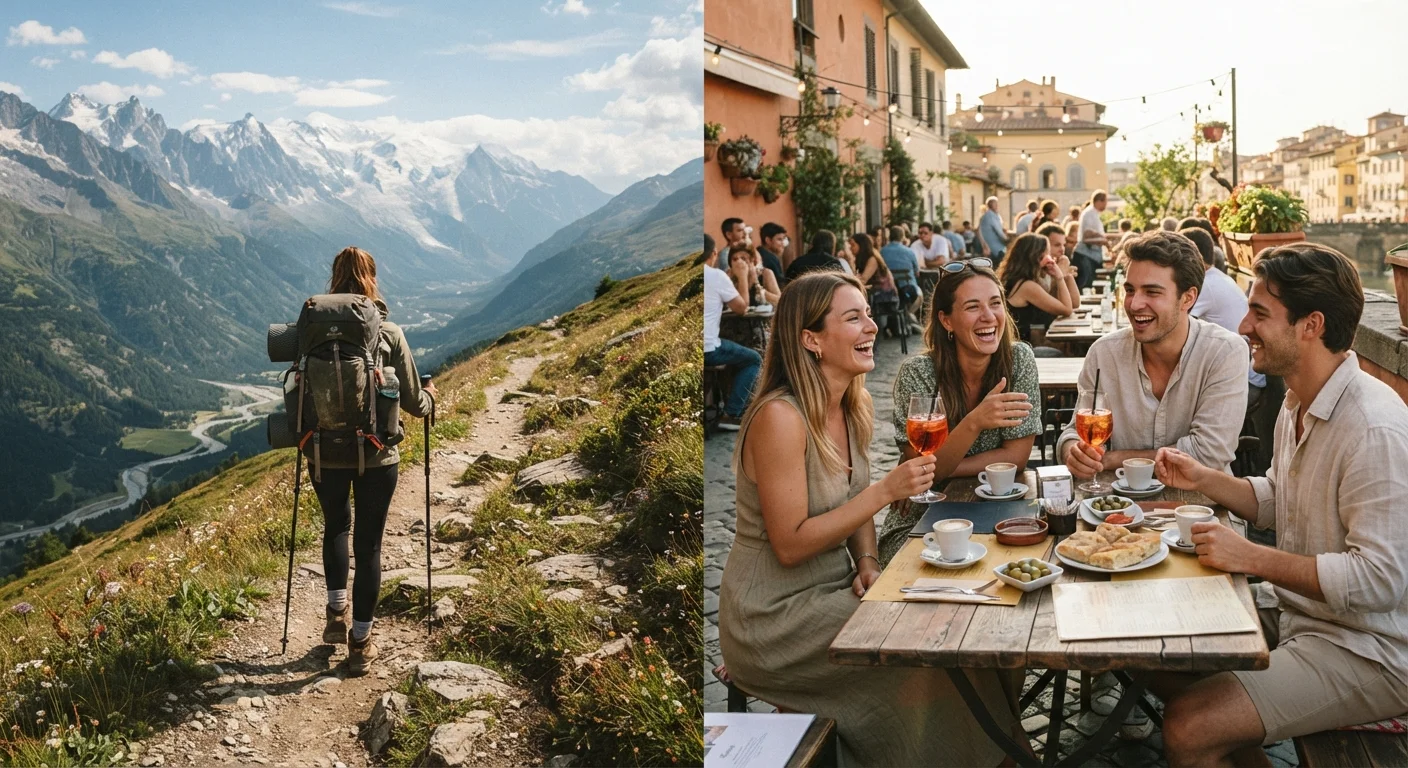
Our Verdict
Neither solo nor group travel is objectively superior - both deliver genuinely rewarding experiences depending on what you're optimizing for. Solo travel wins on freedom and personal growth; group travel wins on shared costs, built-in companionship, and logistical ease. For many American travelers, a hybrid approach offers the most satisfying middle ground.
| Best for | Recommended |
|---|---|
| Travelers who prioritize flexibility and self-directed itineraries | Solo Travel |
| Those working within strict time or cost constraints who benefit from shared expenses | Group Travel |
| First-time international travelers seeking structure and safety in numbers | Group Travel |
| Experienced travelers seeking personal challenge and deeper destination immersion | Solo Travel |
The Core Trade-Off: Freedom vs. Friction
The fundamental difference between solo and group travel isn't cost or safety - it's decision-making friction. When you travel alone, every choice is yours: where to eat, how long to linger, whether to ditch the plan entirely and chase a detour. That freedom is genuinely exhilarating, and many travelers cite it as one of the most empowering experiences they've had. If you're curious about the assumptions that hold people back from trying it, explore the common myths about solo travel before writing it off.
Group travel introduces a different dynamic: you're negotiating constantly. Someone wants more museum time; someone else is ready for dinner. Done well, this friction produces unexpected discoveries and shared memories. Done poorly, it creates resentment. The honest reality is that your travel companions matter as much as your destination.
Consider a Hybrid Approach
You don't have to choose one format for an entire trip. Many experienced American travelers fly solo to a destination, join a small-group day tour or activity for specific experiences, then revert to independent exploration. This gives you the flexibility of solo travel with the social and logistical benefits of group experiences where they add the most value.
Cost Realities for Each Approach
Solo travelers consistently pay a single-occupancy premium. Hotel rooms, cruise cabins, and tour packages are typically priced for two - meaning a solo traveler often pays 150-175% of the per-person rate a couple would pay for the same room. That adds up fast over a 10-day trip. For a deeper look at how accommodation choices amplify or absorb these costs, see accommodation trade-offs budget travelers often overlook.
Group travel, by contrast, unlocks genuine per-person savings on shared rentals, private transport, and bulk bookings. Four people splitting a vacation rental in Lisbon or a rental car in Iceland pay a fraction of what a solo traveler would. However, group dynamics can also push costs upward - one splurge dinner, one upgraded activity, and suddenly the "budget trip" has expanded. Clear financial expectations set before departure prevent most of these surprises. For broader budget strategy across trip formats, the Travel on a Budget hub covers a range of approaches.
72%
Solo travelers who are women
ABTA (the UK travel association) and similar travel surveys consistently find that women make up the majority of solo travelers globally, reflecting shifting travel norms.
~$200-$500
Typical single-supplement cost per trip
Travel industry reports indicate solo travelers commonly pay a single-supplement surcharge on cruises and group tours, averaging $200-$500 on a standard one-week itinerary.
Planning Complexity and Itinerary Pace
Solo travelers own the planning process entirely - which is both empowering and exhausting. You research, book, and troubleshoot alone. Missed connections and bad accommodations land squarely on you. But so does every inspired pivot. If you prefer slow, immersive pacing over a packed schedule, slow travel vs. whirlwind itineraries is worth reading, as the format interacts directly with how you're traveling.
Group trips demand more upfront planning coordination but distribute the cognitive load. Someone handles flights; someone else researches restaurants. Organized group tours go further - logistics are handled for you, which is a genuine relief for busy Americans who want a real vacation without becoming a full-time travel planner.
The pace question is significant. Solo travelers can sprint through six cities or luxuriate in one neighborhood - entirely on their own schedule. Groups move at the speed of the slowest decision, which can frustrate itinerary-driven travelers. Matching your trip format to your natural energy level is its own art; city break vs. road trip considerations explore similar pacing dynamics worth weighing.
| Solo Travel | Group Travel | |
|---|---|---|
| Itinerary Flexibility | Complete - change plans anytime | Limited - requires group consensus |
| Per-Person Accommodation Cost | Higher - single-occupancy premium common | Lower - costs split among travelers |
| Planning Effort | High - all logistics fall on you | Distributed - shared or outsourced to a tour |
| Social Connection | More local interaction by necessity | Built-in companionship, less local contact |
| Safety in Numbers | Relies on individual preparedness | Shared awareness and support |
| Pace of Travel | Entirely self-directed | Moves at group's collective speed |
| Best Fit | Independent, experienced travelers | First-timers or those wanting ease |
Safety, Social Connection, and When to Reconsider
Safety is often the first concern raised about solo travel, particularly for women and first-time international travelers. The honest answer: context matters far more than format. A solo traveler in a well-documented, tourist-friendly destination with solid infrastructure faces very different conditions than someone in an unfamiliar region with limited support networks. Always verify current travel advisories and entry requirements through official US government sources - conditions change, and no article can substitute for real-time official guidance.
Group travel provides built-in social safety - someone knows where you are, and there's shared problem-solving capacity in emergencies. That said, it doesn't eliminate risk; it redistributes it. Groups can also attract more attention in some settings.
Socially, solo travel demands more initiative but often rewards it with richer local interactions - you're more approachable and more inclined to say yes to unexpected invitations. Group travelers tend to socialize within their group bubble, which can limit organic local connection. Seasonal timing shapes both experiences differently; peak versus off-season planning affects crowd levels and how easy it is to move independently or as a group.
Whichever format you choose, understanding how you book - flights versus packages shapes your flexibility and cost exposure in meaningful ways.
This article is for general informational purposes only. Travel conditions, costs, visa requirements, and safety situations change frequently - always verify details with official government and provider sources before making plans.
The content on this site is for informational purposes only and is not a substitute for professional advice. Always consult a qualified professional for guidance specific to your situation.