

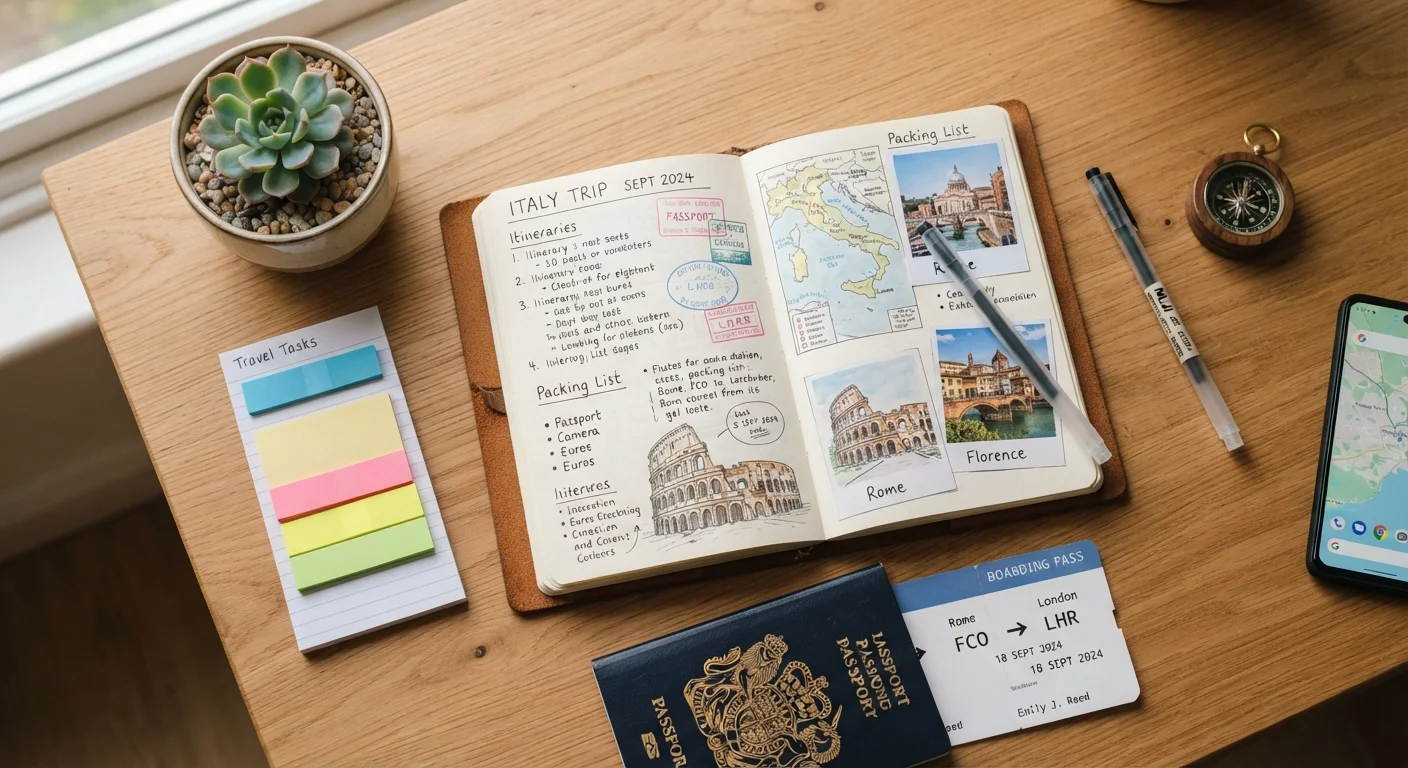
Why Structure Matters in Trip Planning
Most travel stress isn't caused by bad luck - it's caused by decisions made in the wrong order. Booking a flight before checking visa lead times, choosing a hotel before confirming the neighborhood's proximity to key attractions, or building a packed itinerary without accounting for jet lag: these are structural errors, not bad choices in isolation.
A well-planned trip treats each stage as a prerequisite for the next. Think of it less like a to-do list and more like a building: the foundation has to be set before the walls go up. Understanding what each stage involves - and why it comes when it does - is the clearest path to a trip that feels smooth rather than scrambled.
Plan the Stages, Not Just the Trip
Before you open a single booking site, sketch out your four planning stages on paper or in a simple doc: Research, Budget, Bookings & Logistics, and Pre-Departure. Assign rough deadlines to each. This simple framing keeps decisions in the right order and prevents the most common planning errors. If you're new to independent travel, our first big trip guide is a great place to start.
Stage 1 - Research: Know Before You Go
Research is the foundation layer, and it encompasses more than scanning travel blogs. Solid pre-trip research covers entry requirements (passport validity rules, visa categories, vaccination documentation), seasonal conditions, local customs, safety advisories from official sources like the U.S. State Department, and a realistic read on costs in your destination.
This is also the stage where you validate your initial assumptions. A destination that looks affordable in photos may have a high cost of internal transportation. A 'shoulder season' month may be rainy in ways that affect your specific plans. Use the pre-trip research checklist to ensure nothing falls through the cracks before any money changes hands.
Official Sources Are Non-Negotiable for Entry Requirements
Visa requirements, vaccination rules, and travel advisories change, sometimes with little notice. Always verify entry requirements directly with the destination country's official embassy or consulate website, and check the U.S. State Department's travel advisory page before finalizing any international plans. Travel blogs and booking sites may carry outdated information. For a full checklist of what to verify, see our pre-trip research checklist.
Stage 2 - Budgeting: The Decision Filter
A budget isn't a constraint on fun - it's the lens that makes every subsequent decision faster and clearer. Set a total trip budget early, then break it into categories: flights, accommodation, ground transport, food, activities, and a contingency reserve (typically 10-15% of the total). Once you know what each category can absorb, you're not agonizing over individual choices - you're simply checking them against a framework.
Budget also determines feasibility. If your accommodation budget for a major city doesn't align with actual nightly rates during your travel window, the research stage needs to revisit either the destination, the dates, or the duration. Catching this early costs nothing. Catching it after booking costs real money. See our travel on a budget hub for strategies on stretching your dollar further.
65%
Travelers who experience at least one avoidable planning error
According to a survey by the U.S. Travel Association, a majority of leisure travelers report at least one trip disruption they believe better advance planning could have prevented.
8-12 weeks
Typical visa processing time for popular destinations
Processing timelines for visas to countries like India, Brazil, and China can range from eight to twelve weeks or more, depending on application volume and type - a fact that surprises many first-time international travelers.
Stage 3 - Logistics and Bookings: Locking It In
Once research validates your plan and a budget frames your decisions, it's time to secure the moving parts. Flights and accommodation typically need to be locked in first, because they anchor your dates and geography. Everything else - activities, tours, restaurant reservations, ground transport - layers in afterward.
Logistics also includes the less exciting but genuinely critical paperwork: travel insurance evaluation, visa applications, international driving permits if needed, and any required health documentation. These items have fixed processing timelines that won't bend to your schedule, so they need attention early. For a structured view of how to build the day-by-day layer of your trip, see our guide on building a travel itinerary that actually works.
Families planning together should note that group logistics - especially with children - introduce additional considerations around pacing, safety, and activity selection. Our piece on traveling with kids covers what parents consistently wish they'd thought through sooner.
Stage 4 - Pre-Departure: The Final Check
The week before departure is not the moment to start planning - it's the moment to confirm that planning is complete. Check that all bookings are confirmed, documents are organized and accessible (digital and physical copies), travel notifications are set with your bank, and any prescription medications or health supplies are packed with documentation if crossing international borders.
This final stage also means identifying your fallback options: what's the airline's rebooking policy? Is accommodation cancellable? Do you know the local emergency number at your destination? A well-planned trip includes answers to these questions before they're needed, not after.
For a comprehensive end-to-end reference covering every stage from research through departure, the complete trip planning playbook is a useful companion resource.
Frequently Asked Questions
For international trips, three to six months of lead time is a reasonable starting point, especially if visas or vaccinations are required. Domestic trips can often come together in four to eight weeks. The more complex the itinerary - multiple destinations, peak season travel, group coordination - the earlier you should start.
Booking flights and accommodation before completing destination research. Locking in dates before understanding visa timelines, local events, or seasonal conditions can force expensive changes later. Research first, then commit to bookings.
Travel insurance is a personal financial decision, but it's worth evaluating for any trip where non-refundable costs are significant. International medical coverage is often the most critical component for Americans traveling abroad, since US health plans frequently provide limited or no coverage overseas. Consult a licensed insurance agent for guidance specific to your situation.
A trip plan is the full architecture - budget, logistics, bookings, documents, and contingencies. An itinerary is the day-by-day activity structure within that plan. You need the plan in place before the itinerary can be built sensibly.
Start with one clear destination and a rough travel window, then work through each planning stage in sequence. Our <a href="/travel/trip-planning/your-first-big-trip-a-ground-up-planning-guide">beginner's planning guide</a> walks through every step for first-time independent travelers.
The content on this site is for informational purposes only and is not a substitute for professional advice. Always consult a qualified professional for guidance specific to your situation.