

Why the Urge to Over-Schedule Is So Strong
You've saved up, taken the time off, and spent weeks researching. It makes complete sense that you'd want to squeeze every possible experience out of each day. That instinct isn't flawed - it comes from genuine excitement and the very real pressure of limited vacation time. But it consistently produces itineraries that are physically exhausting and emotionally disappointing.
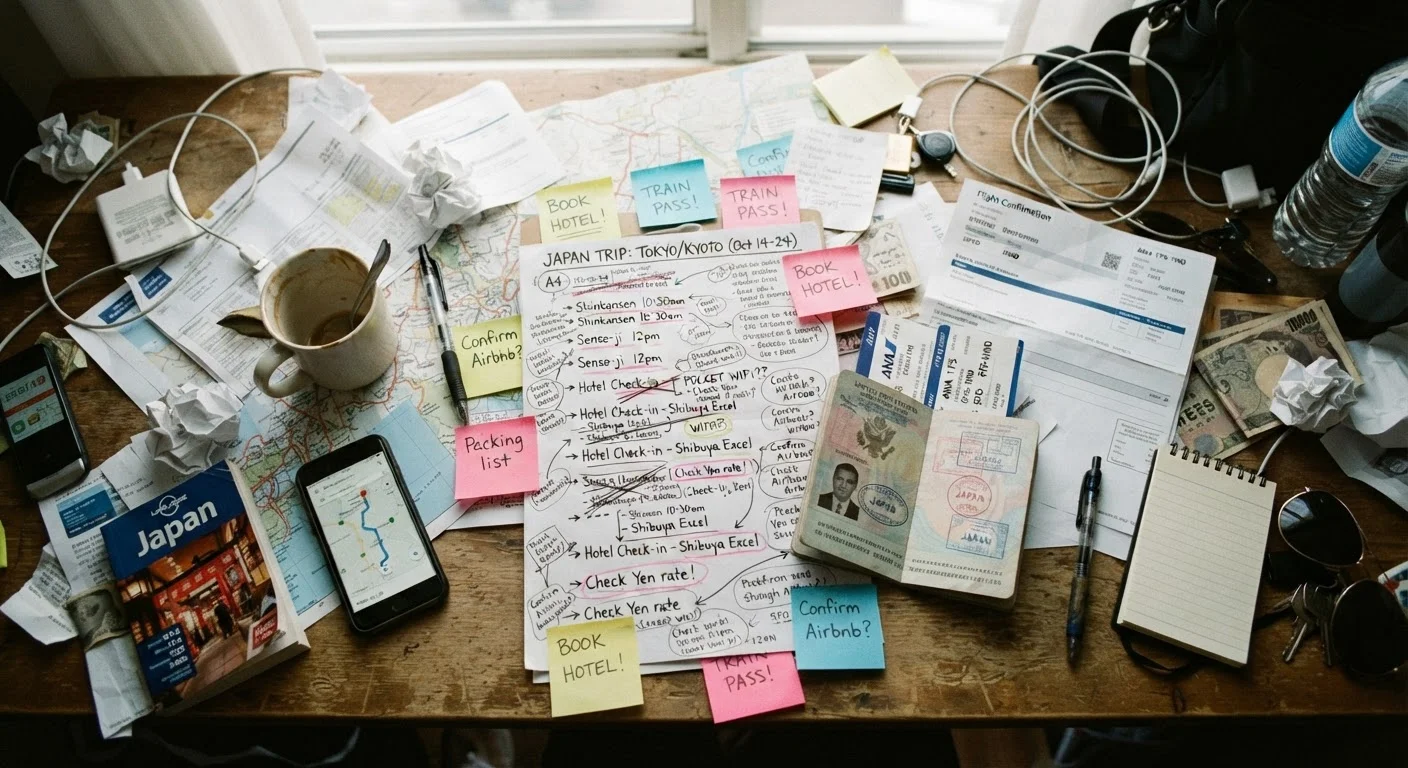
The core problem is that planning happens at a desk, where everything looks manageable on paper. You see a 30-minute slot between a museum and a lunch reservation and it looks fine. In reality, that slot gets eaten by a long checkout line, a confusing transit map, or a sudden downpour. When each day is packed edge to edge, a single delay creates a cascade of missed plans - and the psychological cost is significant. Instead of feeling like a vacation, the trip starts to feel like a project with failing deadlines.
Understanding why this happens is the first step toward planning more honestly. For a broader look at how trip planning fits together from start to finish, see The Anatomy of a Well-Planned Trip.
Ignoring transit time between attractions.
Why it happens: Online maps show distance optimistically, and planners mentally compress travel into a number without accounting for delays, walking pace, or getting lost.
Scheduling activities back-to-back with no buffer.
Why it happens: On paper, consecutive bookings look efficient. Planners underestimate how long tours, meals, and ticketed attractions actually take in practice.
Treating every day like a full-capacity touring day.
Why it happens: Travelers feel guilty about "wasting" a vacation day, so they load every day equally - forgetting that arrival days, departure days, and mid-trip recovery days need lighter schedules.
Failing to account for the physical toll of travel.
Why it happens: Enthusiasm in the planning stage doesn't account for jet lag, sore feet, unfamiliar food, or the cumulative fatigue of navigating new environments day after day.
Over-researching leads to over-committing.
Why it happens: Hours of reading reviews and articles surfaces dozens of "must-see" spots, and travelers feel obligated to visit everything they've bookmarked.
How to Build a Smarter, More Enjoyable Schedule
The fix isn't doing less - it's planning more honestly. Start by mapping out your actual waking hours and subtracting realistic travel time between locations, meal time, and any check-in or ticketing logistics. What remains is your usable activity window, and it's almost always shorter than your first instinct suggests.
1-3
Meaningful activities per day recommended by travel researchers
Travel behavior studies suggest that visitors who limit themselves to fewer anchored activities per day report higher overall satisfaction than those who attempt more.
~2 hrs
Average time lost daily to unplanned delays during travel
Experienced travel planners commonly advise budgeting at least two hours per day for transit friction, wait times, and the unexpected - especially in international destinations.
A practical guideline used by many experienced travel planners: anchor each day around one or two priority experiences, then identify one or two flexible "bonus" activities you'd enjoy but can easily skip. If everything flows smoothly, you do the bonus activities. If the morning runs long, you still had a great day - not a failed one.
Downtime is not wasted time. Sitting at a café for an hour without a schedule, wandering a neighborhood without a destination, or simply resting at your accommodation midday can produce some of the most memorable moments of a trip. It also makes travelers more resilient when things go sideways, which they occasionally will. For a detailed look at structuring daily plans with built-in flexibility, Building a Travel Itinerary That Actually Works walks through the process step by step.
Group Travel Amplifies Overpacking Problems
When you're traveling with family or friends, every scheduling gap gets multiplied. A group of four takes roughly twice as long to make decisions, board transport, and agree on next steps compared to a solo traveler. If you're planning a group trip, cut your daily activity count by at least one item compared to what you'd plan for yourself - and build in explicit decision-making breaks.
It's also worth noting that overscheduling and stress reinforce each other in ways that follow you home. Research consistently links perceived time pressure during leisure activities to reduced enjoyment - the opposite of what a vacation is supposed to deliver. If you're curious about how planning habits can inadvertently amplify stress rather than relieve it, Ways People Unintentionally Make Stress Worse offers a useful perspective.
The content on this site is for informational purposes only and is not a substitute for professional advice. Always consult a qualified professional for guidance specific to your situation.