

From Pedal to Stop: The Hydraulic Chain
When you press the brake pedal, you're setting off a precisely engineered sequence. The pedal is connected to a master cylinder - a pump that pressurises brake fluid throughout a network of lines and hoses running to each wheel. This hydraulic pressure is what does the real work; your foot provides the input, but the system multiplies that force many times over.
At each wheel, the pressurised fluid activates a component that creates friction against a rotating surface, slowing the wheel's spin. The entire process happens in a fraction of a second - a remarkable feat of physics and engineering that most drivers never think about until something goes wrong.
For a broader look at other systems under your hood, see our first-timer's orientation to your engine bay.
~25-65K
Miles typical brake pad lifespan ranges
Actual wear depends heavily on driving style, vehicle weight, and pad material - city stop-and-go driving shortens pad life significantly compared to highway use.
40%
Of crashes where braking was a contributing factor
According to research published by the National Highway Traffic Safety Administration (NHTSA), brake-related issues are among the most common vehicle defects implicated in traffic crashes.
2-3 years
Recommended brake fluid change interval
Many manufacturers and mechanics recommend replacing brake fluid every two to three years because it absorbs atmospheric moisture, lowering its boiling point and reducing hydraulic effectiveness over time.
Disc Brakes vs. Drum Brakes: What's the Difference?
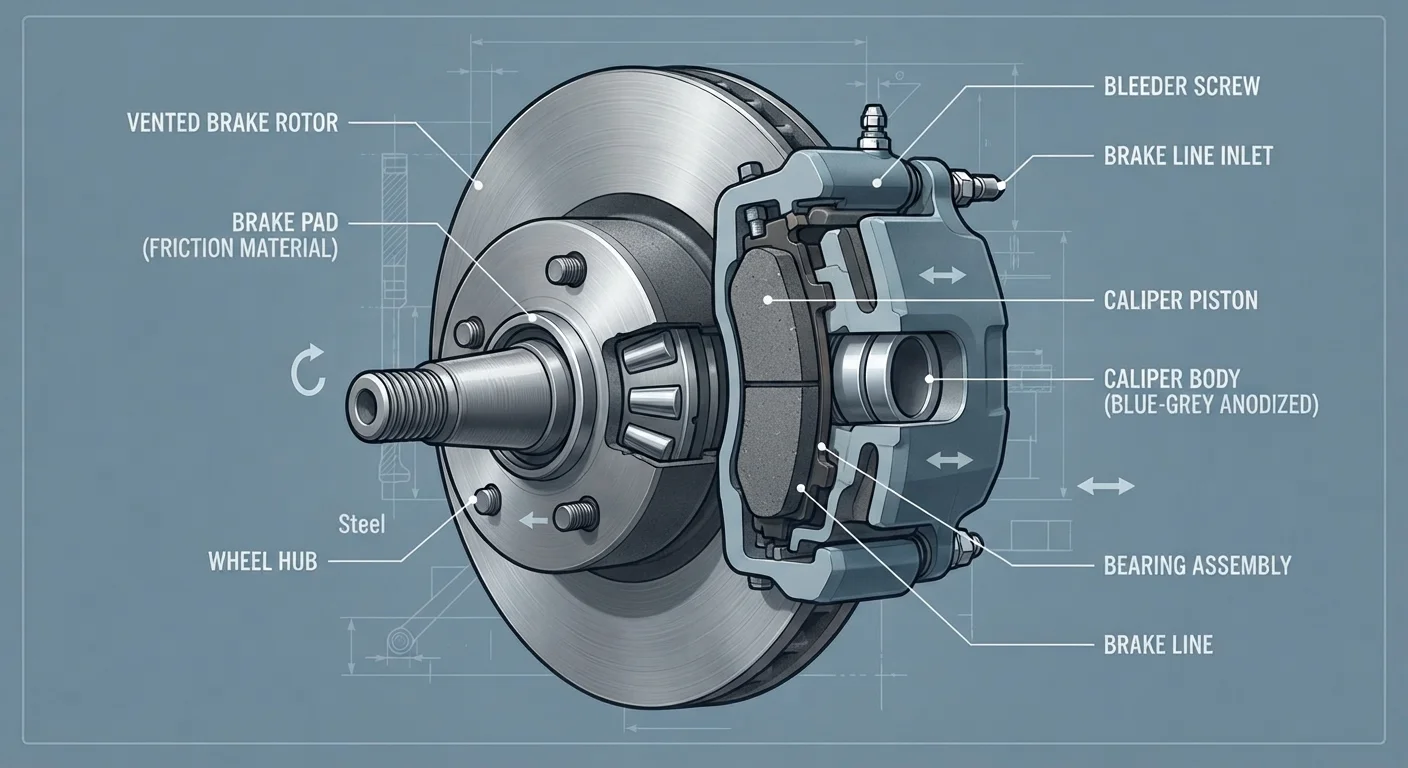
Most modern vehicles use disc brakes on the front wheels and, increasingly, on all four. A disc brake system has three main parts: the rotor (a flat metal disc attached to the wheel hub), the caliper (a clamp-like housing that straddles the rotor), and the brake pads (friction material inside the caliper). When hydraulic pressure reaches the caliper, pistons squeeze the pads against both sides of the spinning rotor, generating friction that slows the wheel.
Older vehicles - and the rear axles of some current models - use drum brakes. Here, curved brake shoes press outward against the inside of a spinning drum attached to the wheel. Drum brakes are durable and cost-effective but trap heat more readily than disc brakes, which can reduce performance during repeated or prolonged braking.
Warning Signs You Should Never Ignore
Your brakes communicate wear in several distinct ways. Recognising these signals early can prevent minor maintenance from becoming a major safety issue.
- Squealing or squeaking: Most brake pads include a metal wear indicator that emits a high-pitched sound when the pad material gets too thin. Persistent squealing when you apply the brakes is a clear signal to get them checked.
- Grinding or metal-on-metal noise: This typically means the pads are worn through completely, and the caliper or shoe is contacting the rotor or drum directly. Immediate inspection is essential.
- Vibration through the pedal: Pulsing you can feel underfoot often indicates warped rotors - usually caused by excessive heat. It can also suggest uneven pad wear.
- Pulling to one side: If the vehicle drifts left or right during braking, a caliper may be sticking or one pad may be worn more than the other.
- Soft or spongy pedal: A pedal that sinks further than usual before engaging suggests low fluid, air in the brake lines, or a failing master cylinder.
Schedule a Brake Inspection Annually
Even if you haven't noticed any warning signs, having your brakes inspected at least once a year - or whenever tires are rotated - gives a qualified technician the opportunity to catch gradual wear before it becomes a safety issue. Many shops include a basic brake check at no charge with other routine services.
Brakes don't fail overnight - they show symptoms. Pairing your brake awareness with proper brake fluid checks keeps the whole hydraulic system healthy.
Brake Maintenance: What to Expect and When
Brake pad lifespan varies widely - generally between 25,000 and 65,000 miles - depending on your driving style, vehicle weight, and the type of pads installed. City driving with frequent stops accelerates wear considerably compared to highway driving.
Rotors can often be resurfaced (machined flat again) once before they reach their minimum thickness and require full replacement. Brake fluid should be inspected periodically; dark, murky fluid or a level below the minimum line are signals to consult your owner's manual or a mechanic. Well-maintained brakes are also closely linked to tire condition - stopping distance depends on both systems working together. Our guide on tire pressure and tread depth covers the tire side of that equation.
Before any long trip, including brakes in your pre-departure check is a smart habit. Our pre-trip safety walkthrough outlines everything worth confirming before you pull out of the driveway.
“The brake system is one of the few vehicle components where deferred maintenance directly and immediately compromises your ability to protect yourself and everyone else on the road. There's no safe version of 'I'll get to it later.'”
— ASE-Certified Master Technician, Automotive Service Excellence (ASE) Certified Master Technician, speaking generally about brake maintenance priorities
Frequently Asked Questions
Common signs include a high-pitched squealing noise when braking (caused by a built-in wear indicator), grinding or scraping sounds, or a longer stopping distance than usual. Many mechanics also check pad thickness during routine oil changes. If in doubt, have a qualified technician inspect them.
A soft pedal usually indicates air in the brake lines or low brake fluid - both of which reduce hydraulic pressure. It can also signal a failing master cylinder. This is a safety-critical issue; have it diagnosed by a professional mechanic as soon as possible.
Most manufacturers recommend changing brake fluid every two to three years, though you should always consult your owner's manual for the interval specific to your vehicle. Brake fluid attracts moisture over time, which lowers its boiling point and can reduce braking effectiveness.
Disc brakes use a flat rotor and a caliper that squeezes brake pads against it to create friction. Drum brakes use curved brake shoes that press outward against the inside of a drum. Disc brakes dissipate heat more effectively and are standard on most modern vehicle front axles.
Light squealing after rain or when brakes are cold can be normal and temporary. Persistent squealing - especially when you apply the brakes - typically signals worn pads and should be inspected promptly. Continuing to drive on worn brakes can lead to rotor damage and significantly longer stopping distances.
You can visually inspect brake pads through the wheel spokes on many vehicles to assess thickness, and you can check the brake fluid reservoir under the hood for level and color. However, a full brake inspection - including rotor condition and caliper function - should be performed by a qualified mechanic.
The content on this site is for informational purposes only and is not a substitute for professional advice. Always consult a qualified professional for guidance specific to your situation.