

Summary
22 items · 30-60 minutes
Why an Annual Car Ownership Review Matters
Owning a car in America involves more than filling the tank and showing up for the occasional oil change. Registration deadlines, insurance renewals, emissions tests, and scheduled maintenance all run on different timelines - and it's easy for any one of them to slip through the cracks. A missed registration renewal can mean fines or even an impounded vehicle. Outdated insurance coverage can leave you financially exposed after an accident. Deferred maintenance compounds quietly until a minor issue becomes a costly repair.
This checklist brings all of those obligations into one annual review. Work through it once a year - ideally a month or two before your registration renews - and you'll enter each new year with your paperwork current, your coverage right-sized, and your vehicle mechanically sound. For a broader look at what ongoing ownership costs to expect, see what new drivers often underestimate about car ownership costs.
Vehicle Owner's Manual
The authoritative source for your vehicle's maintenance intervals, fluid specifications, and service schedules.
Current Insurance Declarations Page
Documents your active coverage limits, deductibles, and policy period - essential for your annual insurance review.
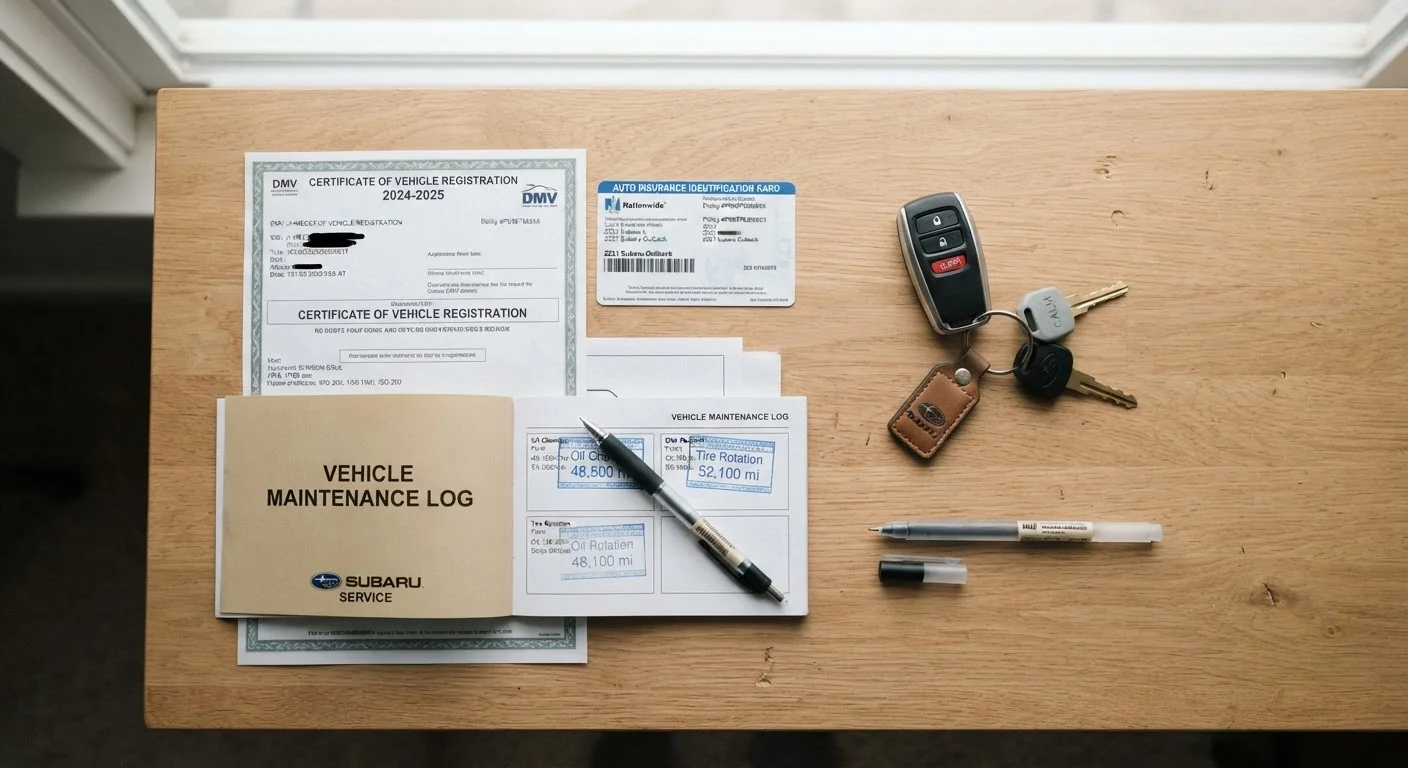
Vehicle Registration Documents
Confirms your current registration status and expiration date so you can act before any deadline.
Service History File
A folder or digital record of past maintenance receipts used to identify gaps and upcoming service milestones.
Tire Tread Depth Gauge
A simple, inexpensive tool for accurately measuring remaining tire tread to assess wear and safety.
Calendar or Reminder App
Used to schedule future renewal deadlines, service appointments, and follow-up checks discovered during this review.
Registration and Legal Documents
Administrative tasks don't feel urgent until they're overdue. Build a habit of reviewing these documents well ahead of their deadlines.
Registration and Legal Documents
Insurance Coverage Review
Routine Maintenance Milestones
Records and Organisation
Late Registration Penalties Add Up Quickly
Most states charge late fees for registration renewals not completed by the expiration date, and driving with expired registration can result in a citation or vehicle impoundment in some jurisdictions. Check your state DMV's website for exact deadlines and grace periods - do not rely on receiving a mailed reminder, as these can be delayed or missed.
Registration requirements, fees, and emissions testing schedules vary considerably from state to state. For a detailed breakdown of how the process works where you live, see our state-by-state registration overview.
Getting the Most from Your Annual Insurance Review
Your auto insurance policy is a living document - the right coverage for a two-year-old commuter car may be wrong for a ten-year-old paid-off vehicle or a recently financed one. Reviewing it annually doesn't require switching providers; it means verifying that your coverage limits, deductibles, and add-ons still reflect your actual situation.
Don't Let a Coverage Gap Go Unnoticed
A lapse in auto insurance - even for a single day - can result in fines, license suspension, and difficulty obtaining coverage at standard rates afterward. If your policy is set to auto-renew, verify the payment method on file is current. If you've made major life changes, contact a licensed insurance agent before your renewal date rather than after, as mid-term corrections may not apply retroactively.
If your driving patterns have changed significantly - more remote work, a new teen driver in the household, or a move to a different state - those changes can each affect your premium and the adequacy of your coverage. Consider consulting a licensed insurance agent for personalised guidance, since coverage needs and available options vary by state and individual circumstance. For strategies on managing insurance and other ongoing costs, see our guide to managing car ownership costs on a tight budget.
Maintenance Milestones to Confirm Each Year
Not every maintenance task falls neatly on a calendar date - many are mileage-based. Once a year, pull your service records and cross-reference them against your vehicle manufacturer's recommended schedule. Your owner's manual remains the most authoritative source for interval guidance specific to your make and model.
For deeper guidance on essential car maintenance practices, and for vehicles with significant mileage, what changes about maintenance after 100,000 miles is worth reviewing. You should also check seasonal car care considerations as part of your annual pass.
Once your review is complete, log every service performed. Documented maintenance protects your investment and helps mechanics diagnose problems faster - keeping good vehicle service records explains how to build that habit effectively.
This article provides general informational guidance only and is not a substitute for advice from a licensed mechanic, insurance agent, or legal professional. Always verify registration requirements, coverage terms, and maintenance schedules with qualified professionals and official sources specific to your state and vehicle.
The content on this site is for informational purposes only and is not a substitute for professional advice. Always consult a qualified professional for guidance specific to your situation.