

Why Older Homes Demand Extra Caution
If your home was built before 1980, it was constructed during an era when materials we now know to be hazardous were considered standard building supplies. Lead-based paint and asbestos-containing materials were cheap, durable, and widely used - and they're still present in millions of American homes today.
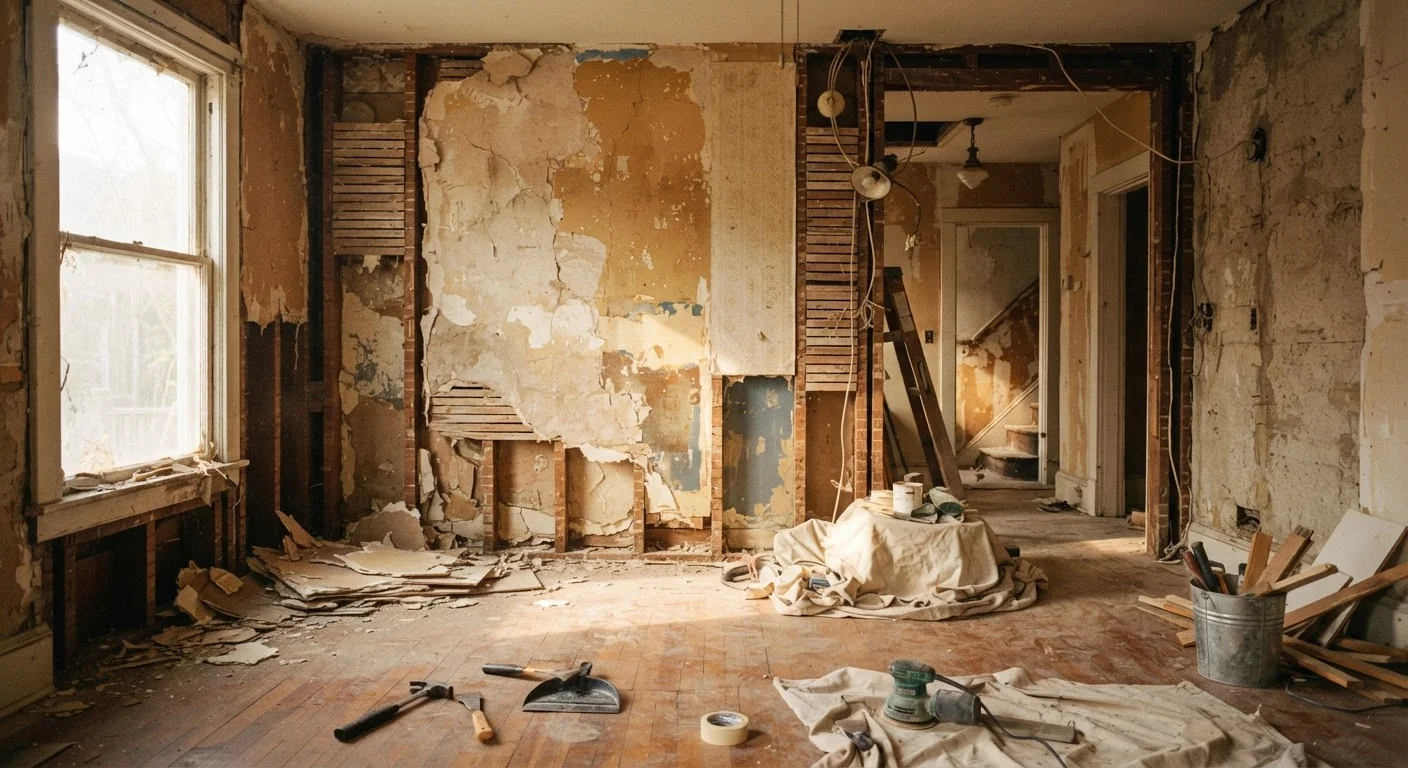
The key distinction is this: these materials are generally not dangerous when left undisturbed and in good condition. The risk arises during renovation. Sanding, drilling, demolishing, or cutting can release lead dust or asbestos fibers into the air, where they become health hazards. Before you plan any project in an older home, understanding what might be lurking behind the walls - and under the floors - is essential. See our pre-project planning checklist for a broader look at preparation steps every homeowner should take.
Intact Materials Are Not Always Immediate Hazards
Lead paint and asbestos-containing materials that are in good condition and left undisturbed are not necessarily an immediate health concern. The hazard emerges when materials deteriorate or are mechanically disturbed. This is why renovation - not simply living in an older home - triggers the need for testing and precaution. If you are unsure about the condition of materials in your home, a certified inspector can assess risk without requiring you to disturb anything.
Lead Paint: Where It Hides and When It's a Problem
The U.S. banned the use of lead-based paint in residential housing in 1978. Any home built before that date should be treated as potentially containing it. The older the home, the higher the likelihood - and the higher the lead concentration in the paint layers.
Lead paint is most commonly found on woodwork, window frames, doors, and exterior siding. It's not just in the top layer; decades of repainting mean lead-containing layers are often buried beneath multiple coats of newer paint. Disturbing those layers through sanding, scraping, or cutting releases microscopic lead particles that can be inhaled or ingested - a serious risk, particularly for children and pregnant individuals.
~40M
U.S. homes estimated to contain lead-based paint
According to the U.S. Department of Housing and Urban Development (HUD), approximately 40 million homes in the U.S. still contain some lead-based paint.
Pre-1978
Year cutoff for lead paint ban in housing
The Consumer Product Safety Commission banned lead-based paint in residential properties in 1978; homes built before this date carry elevated risk.
When is testing required? If your home was built before 1978 and you plan to sand, disturb, or remove painted surfaces, testing is a critical first step. Certified lead inspectors and risk assessors can test surfaces and give you a clear picture of what's present. Do-it-yourself test kits are available, but they vary in reliability; a certified professional assessment provides more defensible results, especially if you're planning significant work.
Under the EPA's Renovation, Repair, and Painting (RRP) Rule, contractors working in pre-1978 homes with children or pregnant women present must be certified and follow specific containment and cleanup procedures. Verify that any contractor you hire holds the appropriate certification.
Asbestos: Common Locations in Pre-1980s Homes
Asbestos is a naturally occurring mineral fiber that was added to dozens of building products for its heat resistance and durability. Its use in residential construction tapered off through the 1970s and into the 1980s, but products manufactured before that period remain in place in older homes across the country.
Common locations include:
- Vinyl floor tiles and the adhesive beneath them - particularly 9-inch square tiles common in kitchens and bathrooms
- Pipe and duct insulation - often wrapped in a white or gray material that looks like corrugated cardboard or plaster
- Popcorn (acoustic) ceiling texture - widely applied in homes built through the late 1970s
- Exterior siding and roofing shingles - some fiber-cement products contained asbestos
- Drywall joint compound - used in some products before the mid-1970s
You cannot identify asbestos-containing materials by appearance alone. Laboratory testing by a certified asbestos inspector is the only reliable method. If you suspect a material contains asbestos, do not sand, drill, or break it until it has been tested. For homes where deferred maintenance has left older materials deteriorating, the urgency of testing increases.
What Renovation Work Disturbs These Materials
Certain renovation tasks carry a much higher risk of releasing hazardous particles than others. Understanding which activities create exposure helps you plan appropriately.
High-disturbance activities include: sanding painted surfaces, removing old floor tiles or their adhesive, demolishing plaster walls, cutting or drilling through old drywall, and removing or disturbing pipe insulation. These tasks should not proceed without prior testing.
Lower-disturbance activities - like painting over intact, non-deteriorating surfaces or replacing hardware without disturbing surrounding material - carry less immediate risk, though professional guidance is still advisable in pre-1978 homes.
Open-concept renovations, which involve removing walls, are a common source of unexpected hazardous material exposure. Our overview of what open-concept renovations actually involve outlines what homeowners frequently underestimate about this type of project.
When to Hire a Professional - and What to Verify
Some hazardous material work is legally required to be performed by licensed professionals. Asbestos abatement - the safe removal and disposal of asbestos-containing materials - must be handled by a state-licensed asbestos contractor in most states. Lead abatement (the full removal of lead hazards, as opposed to interim controls like encapsulation) similarly requires certified professionals in most jurisdictions.
When hiring, verify the contractor holds current state certification for the specific hazard type. Ask for documentation of their containment procedures, air-monitoring protocols, and disposal methods. Licensed abatement contractors are required to follow strict procedures: sealing off work areas, using HEPA-filtered equipment, bagging materials for regulated disposal, and conducting post-work clearance testing.
Permits are often required for abatement work. Check with your local building department before any project begins. For a broader look at when renovation work requires official approval, see our guide on when renovations require permits.
Ask About Disposal Requirements Before Work Begins
Lead-contaminated debris and asbestos-containing materials are regulated waste in most states and cannot be disposed of in standard household trash or dumpsters. Your abatement contractor should handle compliant disposal as part of their scope of work. Ask explicitly about disposal procedures and confirm they are included in the contract before signing.
This article is for general informational purposes only. It is not a substitute for professional inspection, testing, or advice from a certified contractor or licensed abatement specialist. Requirements and regulations vary by state and locality - always verify local rules before beginning any renovation work in an older home.
The content on this site is for informational purposes only and is not a substitute for professional advice. Always consult a qualified professional for guidance specific to your situation.